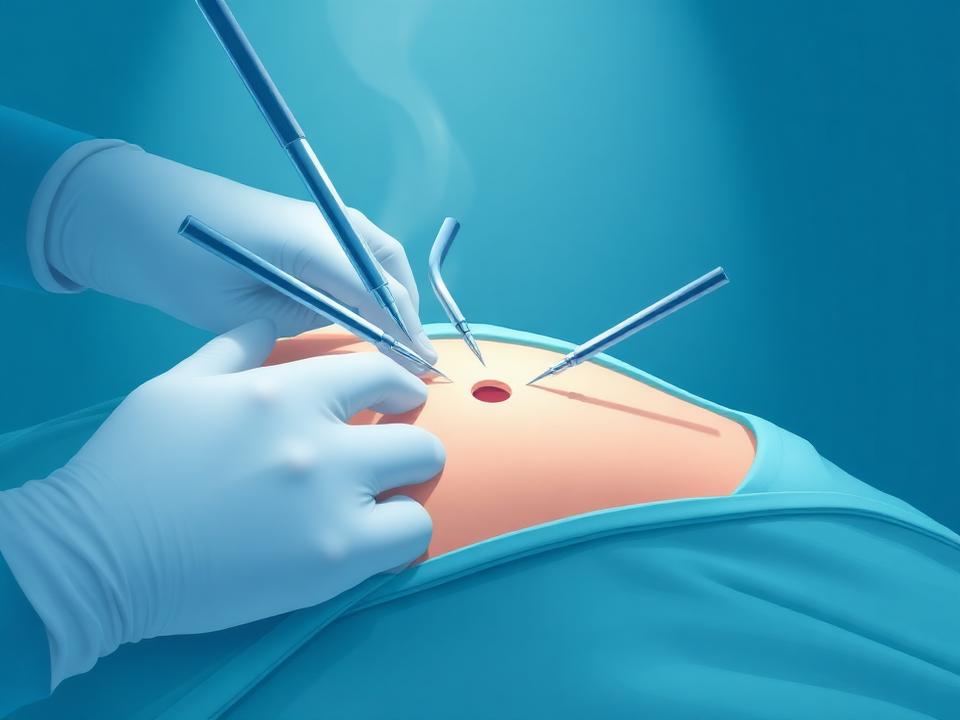
Minimally invasive laparoscopic procedures for bariatric, hernia, gallbladder, and complex GI conditions — performed by Dr. Randeep Wadhawan at Max Hospital, Dwarka.
Overview
What is Laparoscopic Surgery?
Laparoscopic surgery (keyhole surgery) is a minimally invasive technique where procedures are performed through small 5–12 mm incisions using a camera (laparoscope) and specialised instruments. Compared to open surgery, laparoscopy results in significantly less pain, scarring, blood loss, and recovery time.
Dr. Randeep Wadhawan is one of Delhi's most experienced laparoscopic surgeons, having performed thousands of procedures over his career. While he now performs most complex cases robotically, laparoscopy remains an excellent option for many patients and is offered as part of a full spectrum of minimally invasive care.
From weight-loss surgery to complex GI procedures, we offer a comprehensive laparoscopic programme.
Laparoscopic Bariatric
Minimally invasive weight-loss procedures including sleeve gastrectomy, Roux-en-Y gastric bypass, and revision bariatric surgery. Excellent results for suitable patients with BMI ≥ 32.5.
Sleeve Gastrectomy
Gastric Bypass
Revision Surgery
Laparoscopic Hernia Repair
Keyhole hernia repair with mesh for inguinal, umbilical, and incisional hernias. Laparoscopic repair offers faster recovery, less post-operative pain, and lower recurrence rates than open hernia repair.
Inguinal Hernia
Umbilical Hernia
Incisional Hernia
Laparoscopic GI Surgery
Minimally invasive surgery for common GI conditions including gallstones, appendicitis, and bowel disease. Patients go home sooner and recover faster compared to open surgery.
Cholecystectomy (Gallbladder)
Appendicectomy
Colectomy
Laparoscopic Advanced GI
Complex laparoscopic procedures for hepatobiliary and pancreatic disease. These procedures require advanced skills and are performed at high volume only at specialist centres like ours.
Bile Duct Surgery
Liver Surgery
Pancreatic Surgery
Comparison
Robotic vs Laparoscopic Surgery
Both approaches are minimally invasive. Here is how they compare on key clinical parameters.
Feature
Robotic Surgery
Laparoscopic
Precision
Sub-millimetre
High
3D Vision
Yes — 10× magnified HD
2D only
Incision Size
8–12 mm ports
5–12 mm ports
Tremor Filtration
Yes — electronic
No
Instrument Dexterity
7 degrees of freedom
4 degrees of freedom
Blood Loss
Minimal
Minimal–Moderate
Recovery
1–3 weeks
2–4 weeks
Complex Cases
Superior
Challenging
Dr. Wadhawan will recommend the most appropriate approach for your specific condition during consultation.
FAQ
Laparoscopic Surgery FAQs
Laparoscopic surgery (keyhole surgery) is a minimally invasive technique where a camera and instruments are inserted through small 5–12 mm incisions. A video monitor guides the surgeon. Compared to open surgery, laparoscopy results in less pain, smaller scars, shorter hospital stay, and faster recovery.
Yes. For most procedures, laparoscopic surgery has equivalent or better safety compared to open surgery. It carries lower rates of wound infection, blood loss, and post-operative complications. It is now the standard of care for procedures such as cholecystectomy and appendicectomy.
Robotic surgery is preferred for complex cases requiring advanced precision: rectal surgery in narrow pelvis, revision bariatric surgery, complex hernias, and cases with previous abdominal surgery. For straightforward procedures, laparoscopy remains excellent. Dr. Wadhawan will advise the best approach for you.
After laparoscopic sleeve gastrectomy, most patients go home in 1–2 days and return to light activity in 2 weeks. Gastric bypass patients typically stay 2–3 days and recover over 3–4 weeks. Diet progresses from liquids to solids over 4–6 weeks.
All surgery carries risk. Laparoscopic surgery has a lower overall complication rate than open surgery. Specific risks include port-site hernia, inadvertent organ injury, anaesthetic complications, and conversion to open surgery in difficult cases. Dr. Wadhawan's extensive experience minimises these risks.
Previous abdominal surgeries may create adhesions that complicate laparoscopic access, but they are not an absolute contraindication. In such cases, robotic surgery may be preferred as its enhanced vision and precision are particularly helpful in scarred anatomy. Dr. Wadhawan will assess your case individually.
Consult Delhi's Best Robotic Surgeon
Schedule a consultation with Dr. Randeep Wadhawan at Max Hospital, Dwarka, New Delhi.