AI Summary
- Laparoscopic surgery uses small cuts and a camera.
- Possible benefits include less pain, smaller scars, and shorter hospital stays.
- Cost depends on the procedure, hospital, tests, and medical needs.
- Choosing an experienced surgeon and an equipped hospital is important.
- Weight-loss surgery requires full assessment and long-term follow-up.
Surgery can feel stressful, especially when patients do not know what to expect. Today, many people choose advanced laparoscopic surgery because it uses smaller cuts and may support a smoother recovery than traditional open surgery. Delhi offers access to experienced surgeons, modern hospitals, and treatment options for common abdominal, digestive, hernia, gallbladder and weight-related conditions.
However, the right method depends on the patient’s health, diagnosis and surgical needs. This guide explains why patients consider laparoscopic surgery in Delhi, what benefits they may receive, how costs are decided and what to check before choosing a surgeon for safe, informed treatment decisions.
What Is Advanced Laparoscopic Surgery?
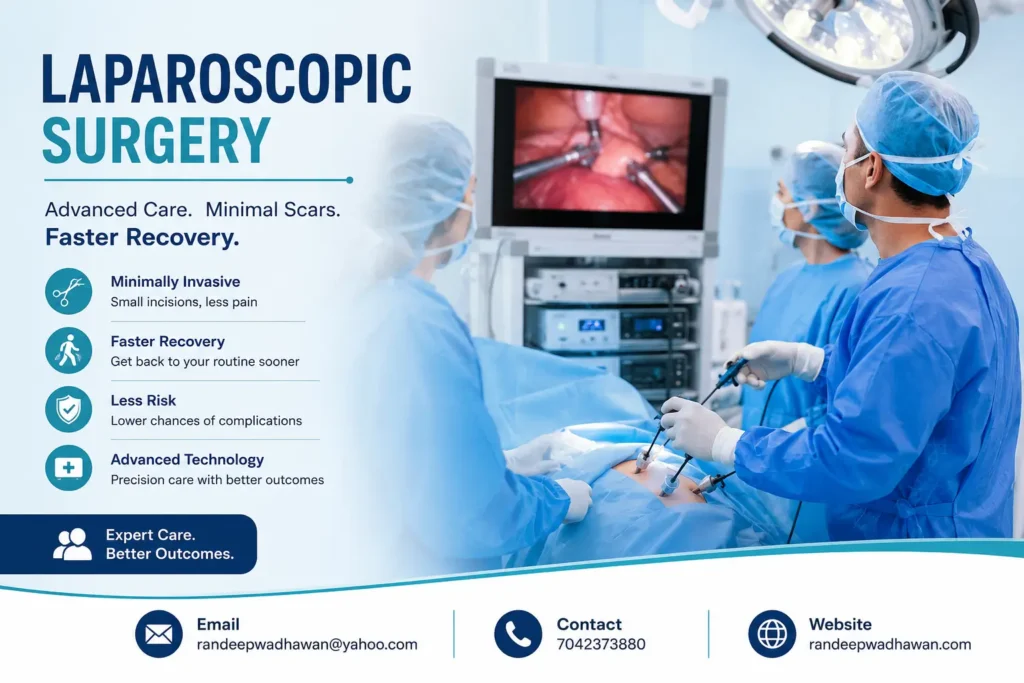
Advanced laparoscopic surgery is minimally invasive. The surgeon makes a few small cuts instead of one large incision. A thin camera shows the organs on a monitor while special instruments operate.
It may be used for gallbladder, appendix, hernia, digestive, and bariatric procedures. Suitability depends on the diagnosis, previous surgery, health, and case complexity.
Why Do Patients Prefer Laparoscopic Surgery in Delhi?
Many patients choose laparoscopic surgery in Delhi because smaller incisions may reduce the physical effects of surgery. Suitable patients may experience:
- Less postoperative pain
- Smaller scars
- Lower blood loss
- Earlier movement
- Shorter hospital stays
- Faster return to routine activities
The camera gives a magnified view, supporting careful work around organs and tissues.
Results vary. Age, health conditions, operation type and complications can affect recovery.
How Can You Choose the Best Laparoscopic Surgeon in Delhi?
Do not choose the best laparoscopic surgeon in Delhi through advertisements alone. Look for relevant experience, clear communication, hospital support, and a personal treatment plan.
-
Does the surgeon regularly perform your procedure?
Experience with the exact surgery matters because gallbladder, hernia, bowel, and bariatric procedures require different skills.
-
Are the risks and alternatives explained?
A responsible laparoscopic surgeon in Delhi should discuss complications, recovery, and whether laparoscopic, robotic, or open surgery is most suitable.
-
Can the operation change to open surgery?
Yes. Conversion may be required when open surgery is safer or gives better access.
Dr. Randeep Wadhawan offers consultation for laparoscopic, gastrointestinal, bariatric, and robotic procedures. Final suitability should be decided after a personal medical assessment.
What Determines Laparoscopic Surgery Cost in Delhi?
Laparoscopic surgery cost in Delhi is different for every patient. A simple operation may cost less than a complex procedure requiring longer theatre time, special devices, or extra monitoring.
The estimate may include surgeon fees, anesthesia, hospital charges, tests, medicines, disposable instruments, room type, hospital stay, and follow-up.
Ask for a written estimate and check what is included. Insurance approval, room upgrades, unexpected findings or complications can change the final bill.
When Is Weight-Loss Surgery Considered?
Fat loss surgery in Delhi is more correctly called bariatric or metabolic surgery. It is not a cosmetic shortcut. It may be considered for clinically severe obesity when supervised diet, exercise, and medical treatment have not produced lasting results.
Weight loss surgery in Delhi may include sleeve gastrectomy or gastric bypass. Suitability depends on body mass index, obesity-related illnesses, nutrition, mental readiness and commitment to long-term lifestyle changes.
Dr. Randeep Wadhawan evaluates each patient before recommending surgery. Good bariatric care should also include nutrition advice and regular follow-up.
Why Does Hospital Support Matter?
Safe surgery depends on the full medical team. The hospital should have trained anesthesia staff, equipped operating rooms, diagnostic services, infection control, and postoperative monitoring.
Complex cases may also require intensive care, imaging, blood support, or other specialists. Patients should choose a centre that can handle both planned care and unexpected problems.
How Can You Book a Consultation?
Carry reports, scans, prescriptions, and details of medical conditions. Mention earlier operations, allergies, blood-thinning medicines, diabetes, heart disease, or breathing problems.
To discuss suitable options with Dr. Randeep Wadhawan, call +91 7042373880 or email randeepwadhawan@yahoo.com.
Frequently Asked Questions –
Q. Is laparoscopic surgery painless?
A. No. There is some discomfort to be expected. However, pain can be less than that experienced after open surgery in certain cases.
Q. How long does recovery take?
A. Recovery varies. Some patients resume light activity within days, while complex procedures may require several weeks.
Q. Is laparoscopic surgery safe for everyone?
A. No. Health conditions, anatomy, previous operations and emergency findings may affect suitability.
Q. Can laparoscopic surgery become open surgery?
A. Yes. The surgeon can change his mind if open surgery is more secure or allows greater access.
Q. Does insurance cover laparoscopic surgery?
A. Coverage depends on the policy, diagnosis, hospital and medical necessity. Confirm approval before admission.